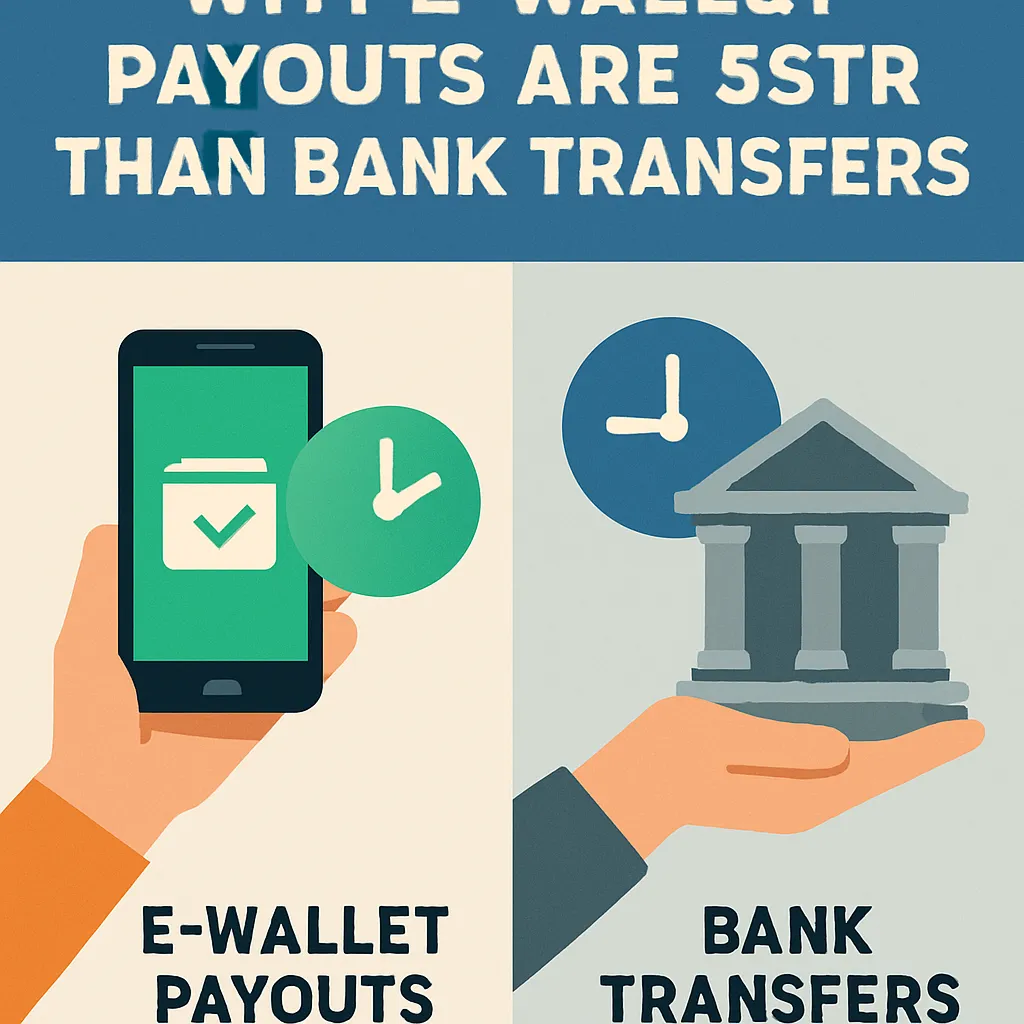
Why e-wallet payouts are faster than bank transfers
Are you tired of watching your money move at a snail’s pace? Waiting days for your funds to clear through traditional bank transfers can be frustrating, especially as we head further into the digital age. The core question many ask in 2025 is clear: Why are e-wallet payouts so much faster than bank transfers, and should you be making the switch? In this article, we’ll break down the key differences, shine a light on how payment technologies have evolved, and help you decide which method suits your needs best. Ready to leave slow transfers behind? Read on to discover why e-wallets offer not just speed, but greater flexibility and convenience for anyone managing their money today!
- The Rise of E-Wallets in 2025: Are You Missing Out?
- How Do Bank Transfers Work? Understanding The Traditional Process
- What Makes E-Wallet Payouts So Fast?
- Comparing E-Wallets and Banks: Which Is More Secure in 2025?
- What Are the Downsides? When Slower Bank Transfers Might Be Better
- Conclusion: Time to Make Your Money Move Faster
The Rise of E-Wallets in 2025: Are You Missing Out?
E-wallets have experienced explosive growth in recent years, with usage skyrocketing across the globe in both personal and business finances. In 2025, digital wallet transactions far outnumber those of traditional banks in sectors like online commerce, gaming, and gig work. The convenience of managing payments at any hour—without visiting a physical branch—has driven mass adoption, appealing especially to tech-savvy consumers and younger generations. Businesses, too, are eager to reduce payout times and increase customer satisfaction, making e-wallets attractive solutions. From instant refunds in e-commerce to speedy salary disbursements for freelancers, the advantages are hard to ignore. If you’re still relying exclusively on bank transfers, you might be missing out on a faster, more flexible way to move your money.
How Do Bank Transfers Work? Understanding The Traditional Process
To grasp why e-wallet payouts are faster, it’s important to first understand what causes the delays in bank transfers. Typically, sending money through banks—whether for payroll, business payments, or personal transfers—involves several steps. When you initiate a transfer, your bank communicates with one or more intermediary institutions, especially for international payments. These intermediaries process, verify, and authorize the transaction in a series of steps that can take hours or even days. On top of that, most banks operate only during business hours and close on weekends and holidays. Regulatory checks and anti-fraud measures, while essential for security, can add more time to the transaction. All these layers create bottlenecks, leaving your money stuck in “pending” status much longer than you’d like.
What Makes E-Wallet Payouts So Fast?
Instant Money Transfers: The E-Wallet Advantage
The biggest draw of e-wallets is their ability to deliver funds instantly, often within seconds of the transaction being authorized. Unlike banks, which rely on legacy infrastructure and intermediaries, e-wallets process payments directly between sender and recipient through a secure digital platform. Since everything is handled electronically and often on a single network, transactions bypass the typical bottlenecks of the traditional system. E-wallet services don’t stop for the weekend or close at 5 PM—they work 24/7, 365 days a year, so your money arrives when you need it. For people who depend on fast payments—like freelancers, online sellers, or gig economy workers—this speed is a game-changer. You no longer have to schedule your financial life around banking hours or worry about delayed access to your earnings. E-wallets have set a new normal: money moves as fast as you do.
To illustrate the key differences in speed and functionality between e-wallet payouts and bank transfers, take a look at the comparison below:
| Feature | E-Wallet Payouts | Bank Transfers |
|---|---|---|
| Transaction Speed | Instant or within minutes | Several hours to several days |
| Availability | 24/7, including holidays | Business hours, closed weekends/holidays |
| Intermediaries | Direct peer-to-peer | Multiple banks/intermediaries |
| Transfer Fees | Often low or free | Varies; sometimes higher for international |
| International Support | Seamless, multi-currency | Often slower with higher fees |
As you can see, e-wallet payouts consistently outpace bank transfers in every crucial area: speed, cost, and flexibility. This innovation fits perfectly with the demands of the modern, always-on economy, allowing individuals and businesses to handle finances without unnecessary delays.
Comparing E-Wallets and Banks: Which Is More Secure in 2025?
Speed isn’t the only concern when it comes to transferring money; security is just as crucial, especially with increasing rates of cybercrime in 2025. Fortunately, e-wallets offer cutting-edge protections that rival—and sometimes surpass—those of traditional banks. Advanced encryption techniques, biometric logins (like fingerprint or facial recognition), and real-time two-factor authentication all help secure digital wallet transactions. This technology not only guards against unauthorized access but also makes it extremely difficult for criminals to intercept or tamper with your funds. By comparison, banks are sometimes slower to implement the latest technological updates, creating potential vulnerabilities when processing transactions via older systems. And because e-wallets often use tokenization methods, your sensitive payment data isn’t shared directly, further reducing risk. In a world where online security can never be taken for granted, it’s reassuring to know that the fastest payment option also offers strong protection.
If you’re considering which method to use, weigh these important security features:
- Biometric authentication, such as fingerprint or facial recognition, ensures that only you can approve payments from your e-wallet.
- Real-time fraud monitoring and instant transaction alerts help you spot unauthorized attempts the moment they happen.
- End-to-end encryption keeps your payment data safe during every stage of the transfer process.
- Two-factor authentication adds an extra layer of protection, requiring both a password and a unique code to approve transactions.
- Tokenization ensures that your card or banking details are never exposed during the payment process.
What Are the Downsides? When Slower Bank Transfers Might Be Better
While e-wallets offer speed and convenience, there are situations where traditional bank transfers may still be preferable. Some large transactions, for example, must be routed through banks due to regulatory requirements or the need for written records. For people who regularly send or receive high-value amounts—like buying real estate or settling business invoices—banks can provide greater oversight and often include more comprehensive fraud protection. Certain countries have banking regulations that limit the use of e-wallets for cross-border payments, making banks the only available channel in such scenarios. Additionally, e-wallets can sometimes impose transaction limits or fees, especially for international withdrawals or currency conversions. It’s crucial to weigh these potential drawbacks before making every payment electronically. Banks, while slower, still play a vital role in the financial system and may offer peace of mind for infrequent but significant transactions.
To summarize, consider these scenarios where bank transfers might be the smarter choice:
- Large, one-off transactions that exceed your e-wallet’s daily or monthly limits.
- Payments that require detailed documentation for legal, tax, or business recordkeeping.
- Transfers to countries or regions where e-wallets are not yet widely supported.
- When you want to utilize bank-specific services, like escrow or payment guarantees.
- Cases where your recipient doesn’t use or trust digital wallets and prefers bank wires.
Conclusion: Time to Make Your Money Move Faster
As the world moves at an ever-quickening pace in 2025, the days of waiting for slow bank transfers are increasingly behind us. E-wallet payouts offer a blend of speed, accessibility, and robust security that make them hard to beat for everyday payments, gig economy earnings, and cross-border transactions alike. While banks remain essential for certain scenarios, and sometimes provide extra layers of service or compliance, e-wallets are setting the new standard for how quickly finances can be managed. By understanding the clear benefits and occasional limitations of both payment methods, you can choose the best fit for your needs—ensuring your money is always at your fingertips when you need it most. Don’t let slow transfers hold you back; now is the time to experience the instant, convenient world of e-wallet payouts!